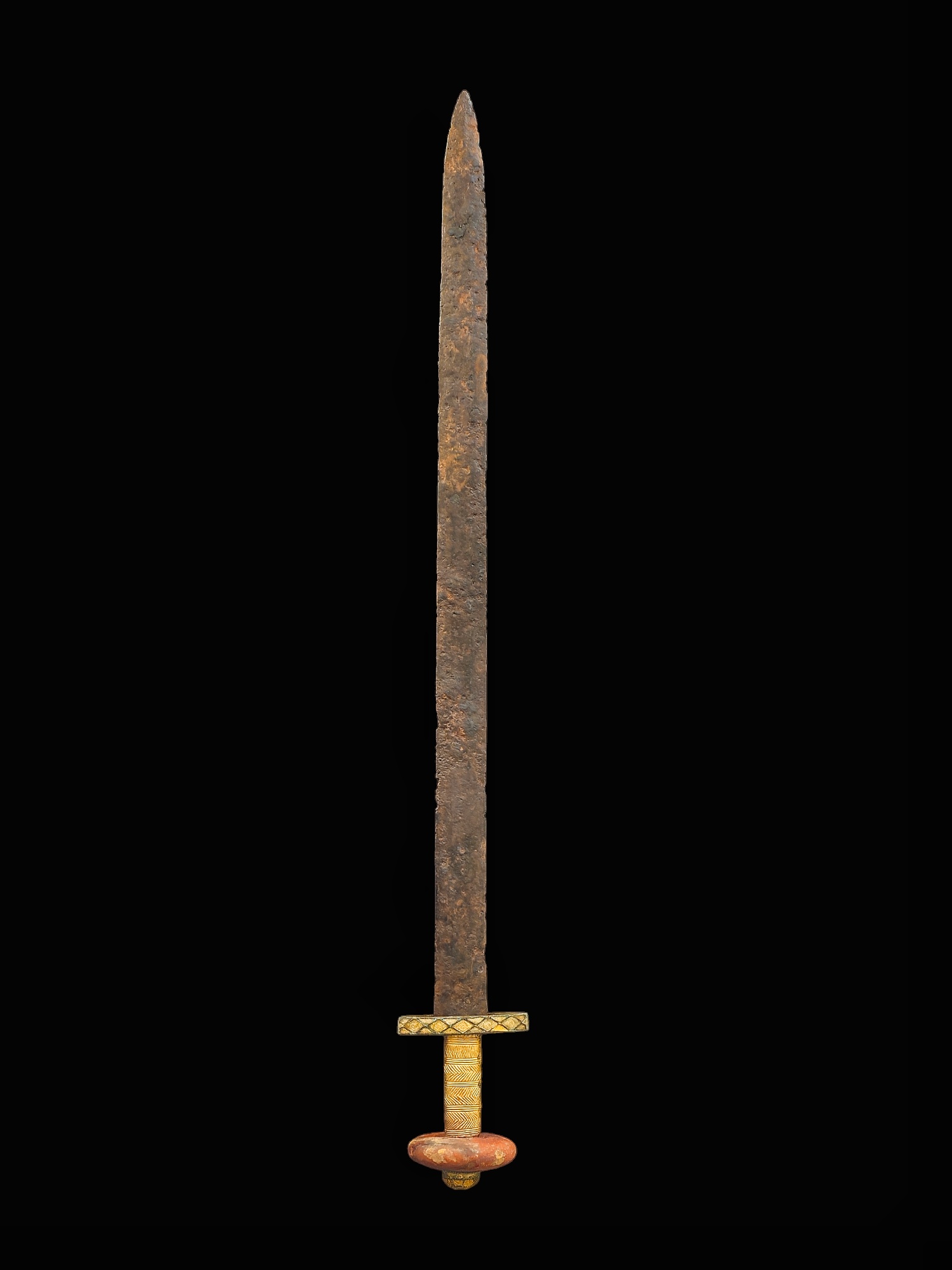
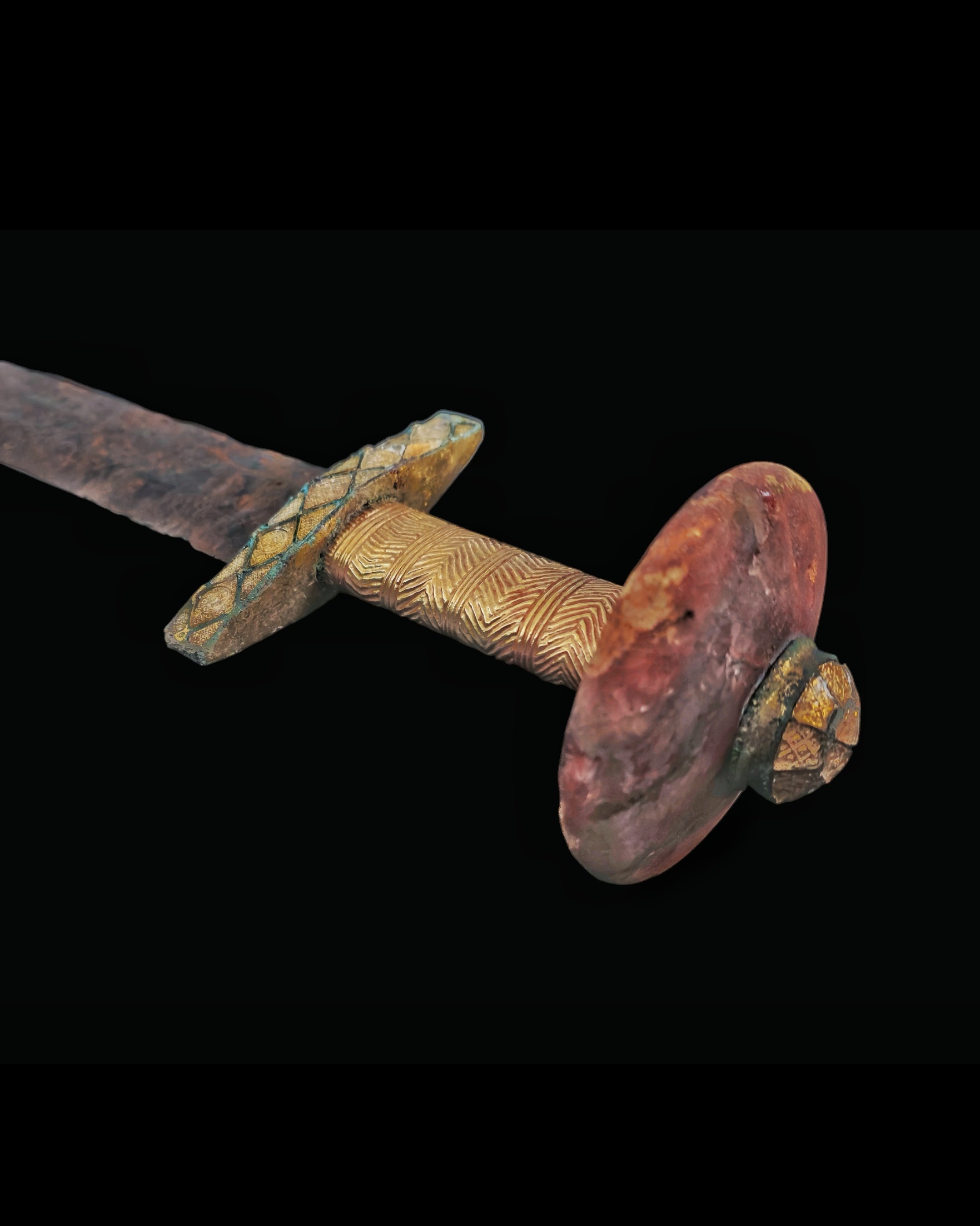
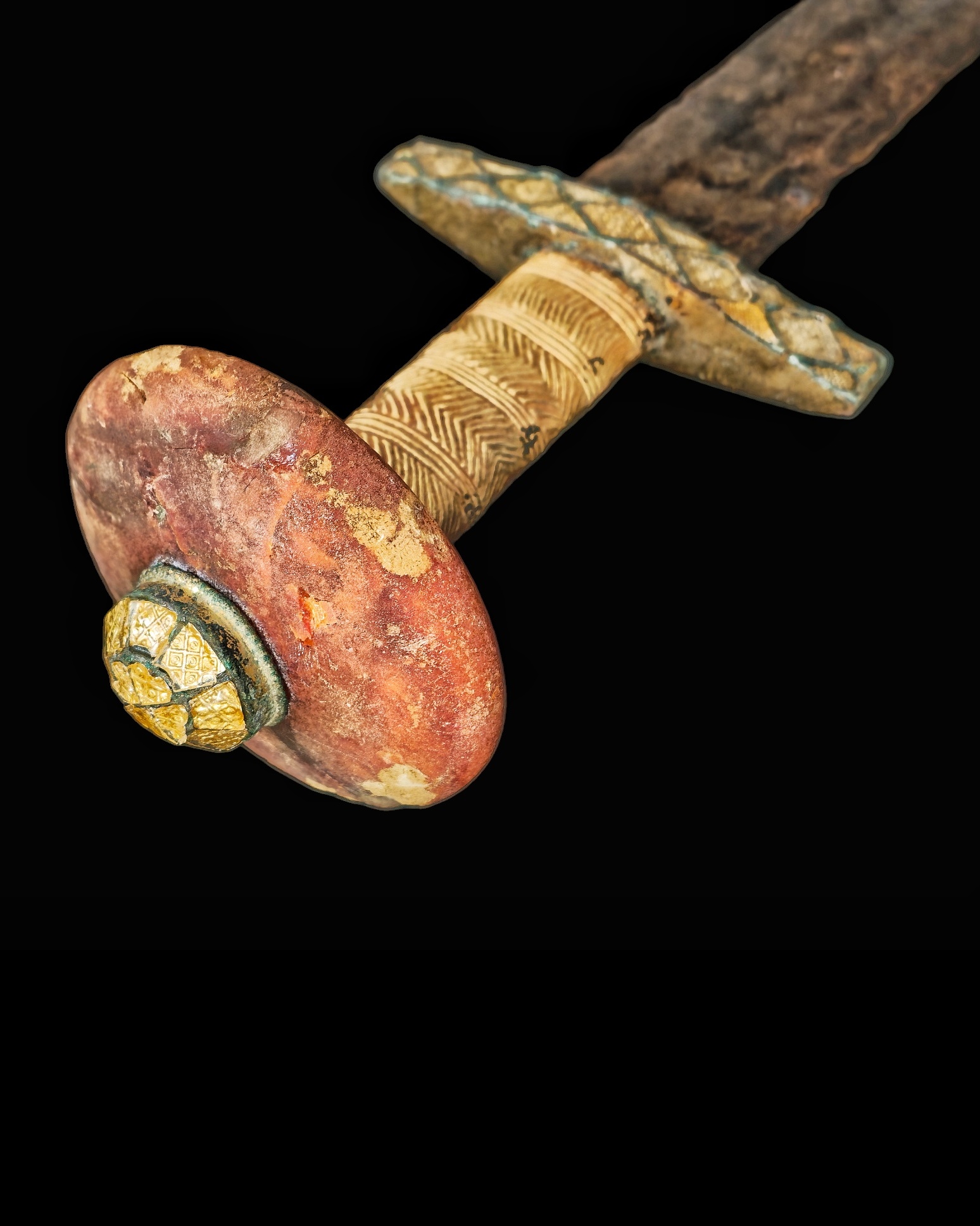
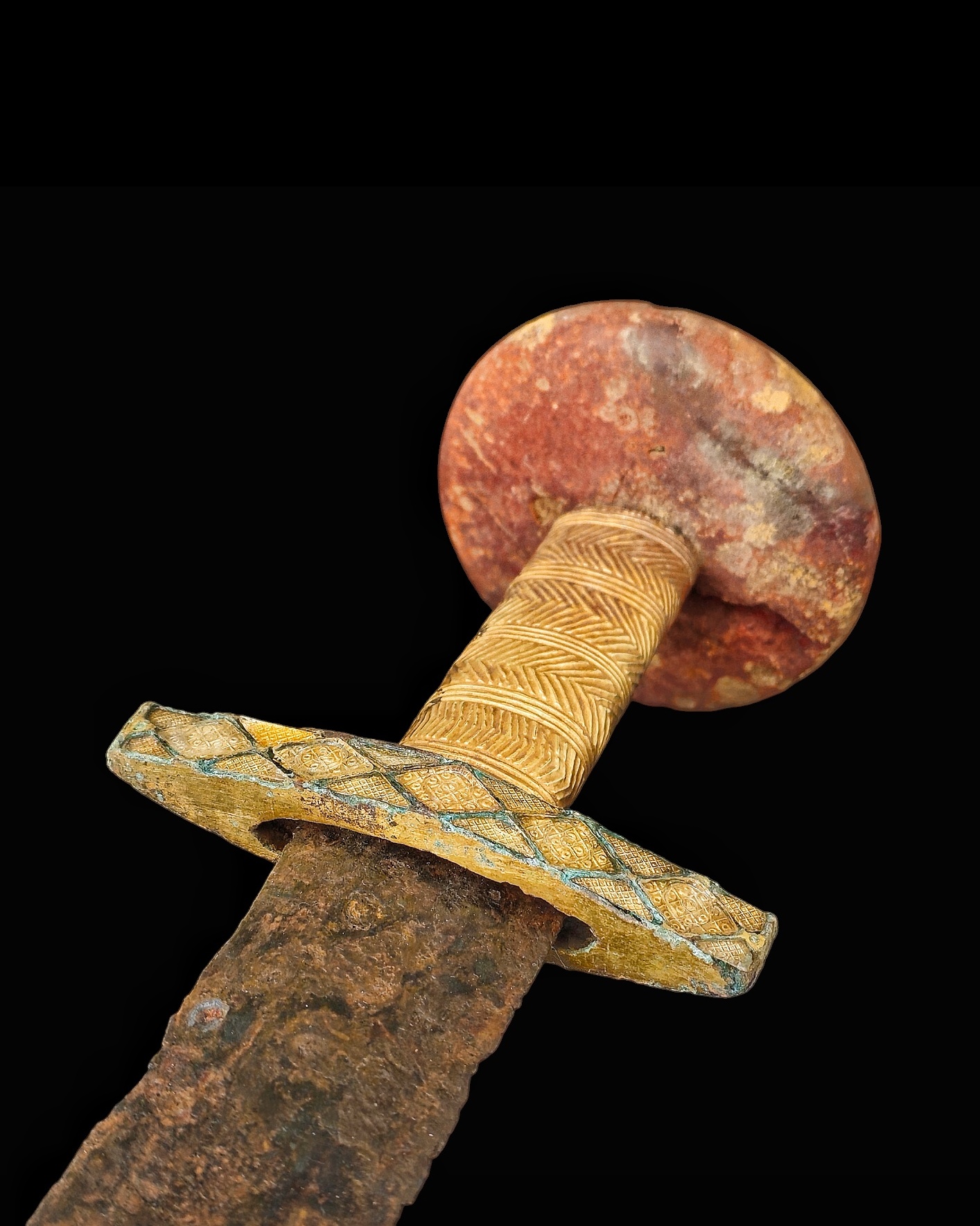
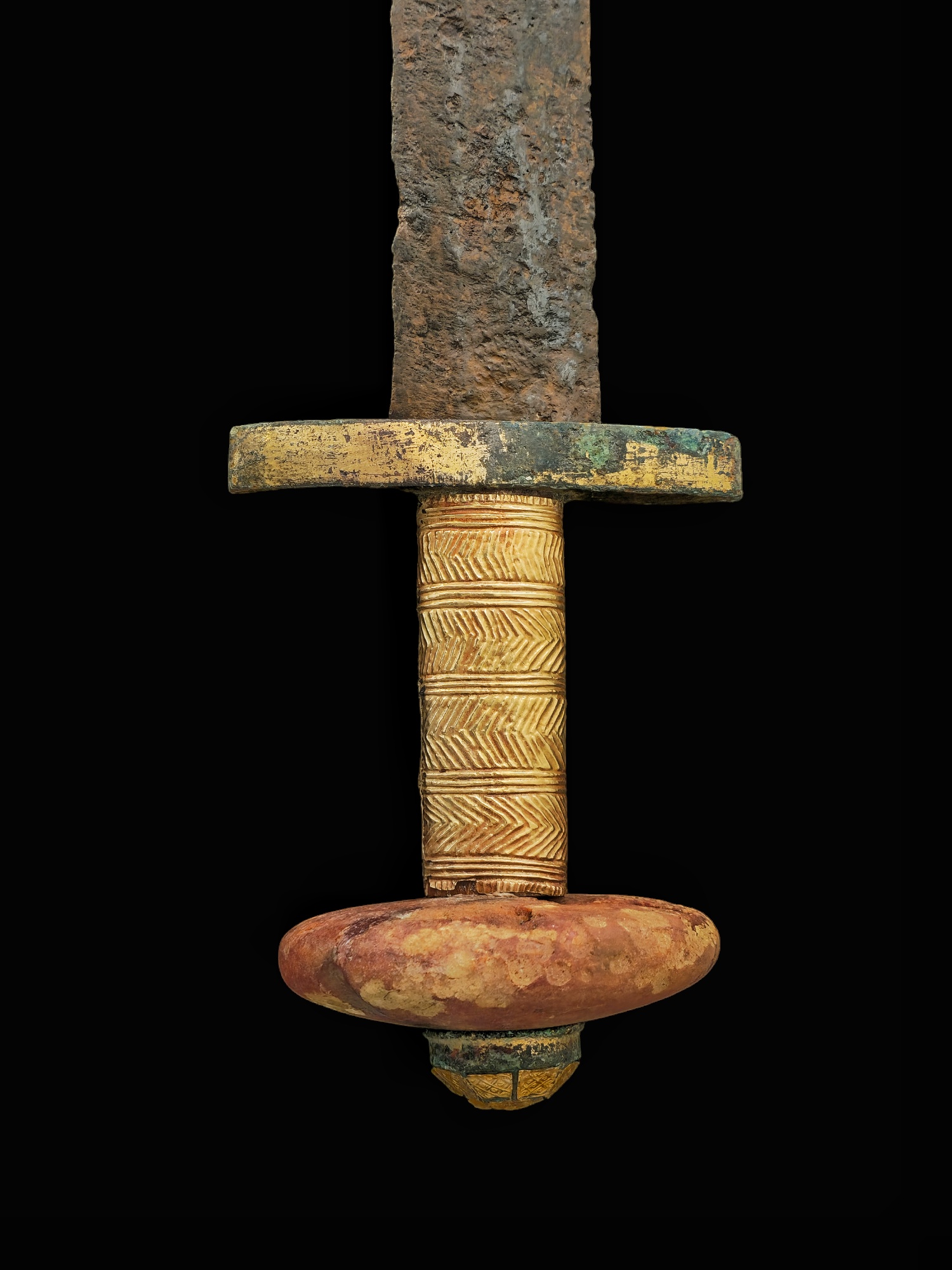
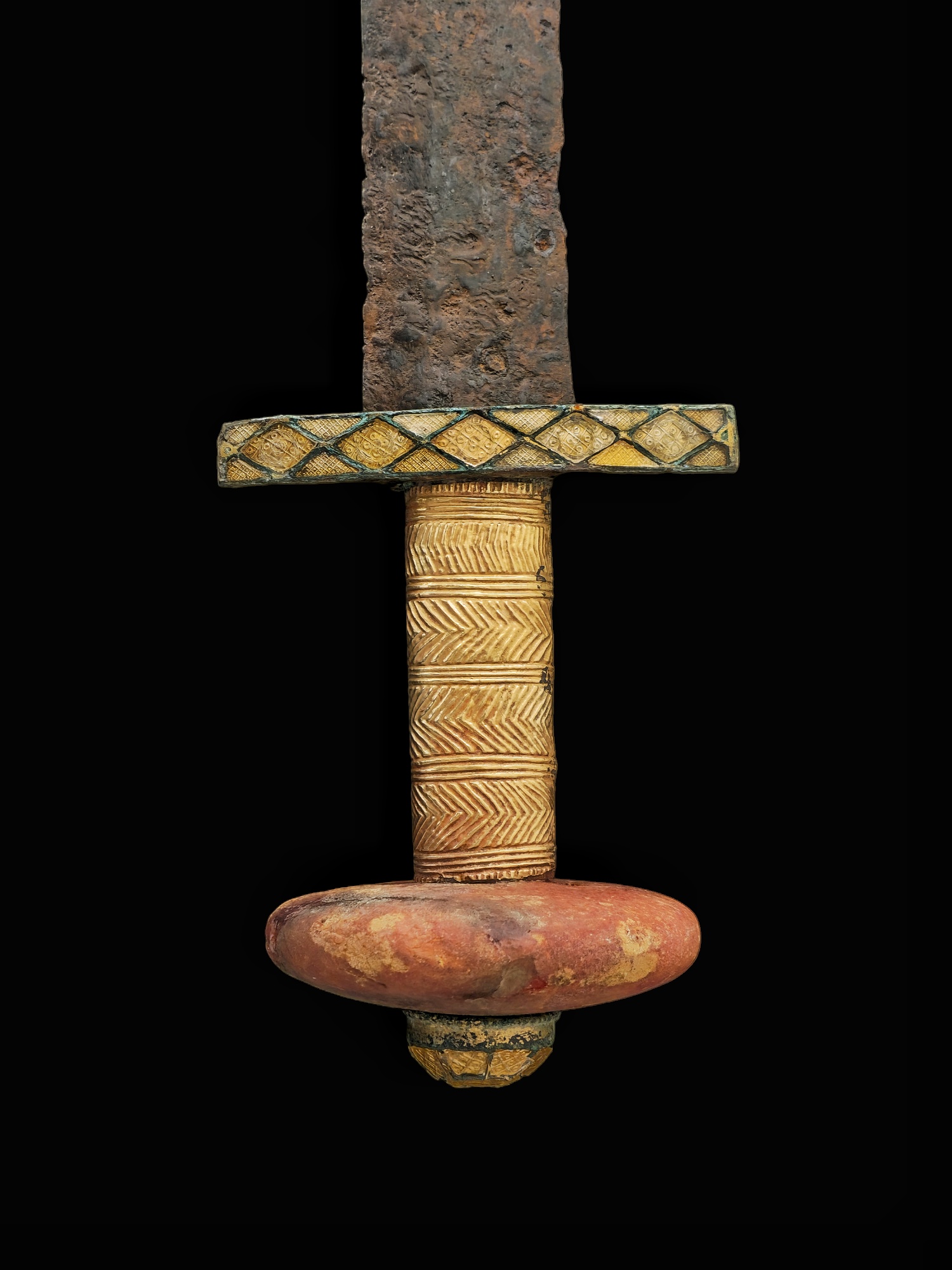
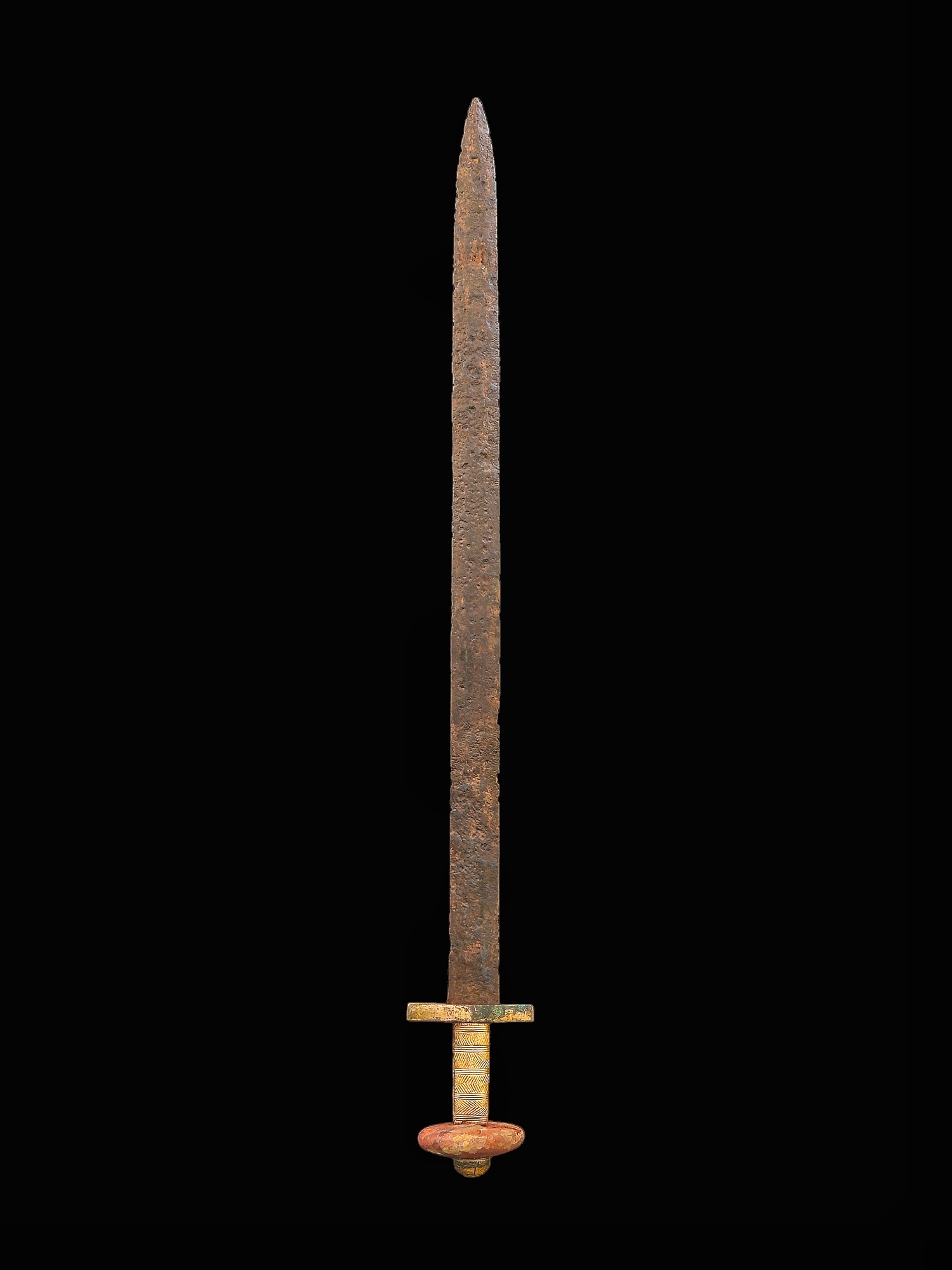
Migration period ceremonial sword with a gold grip
15,000.00 €
1 in stock
Description
Eastern or Central Europe, Migration Period, dating 5th-7th century AD.
Swords of this type are characteristic of nomadic cultures of the Migration period from Central and East Europe (Huns and Goths), and, a little different in style – to Merovingians. Swords of this type are found in Hunic and Gothic population areas – from the Black Sea in the East, the Danube in the South, modern Polish, German, and French territories in the North and West. They also were used by Lombards and Rugians. Most probably Merovingian swords were also influenced and made under this fashion, with certain local alterations and modifications.
Exclusive decoration of this sword shows its ceremonial or ritual purpose and the high social status of the individual (ruling, or royal level), to whom it belonged.
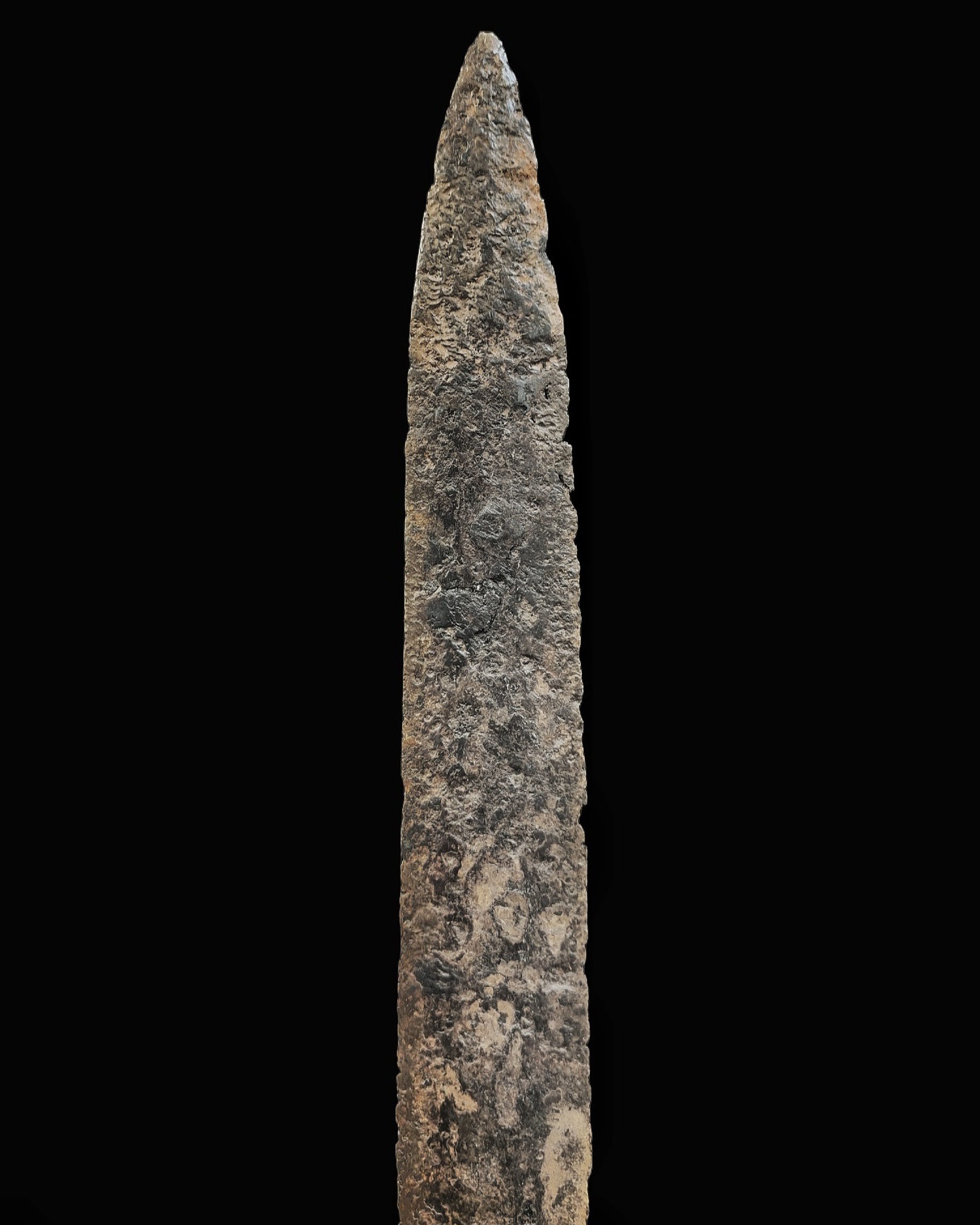
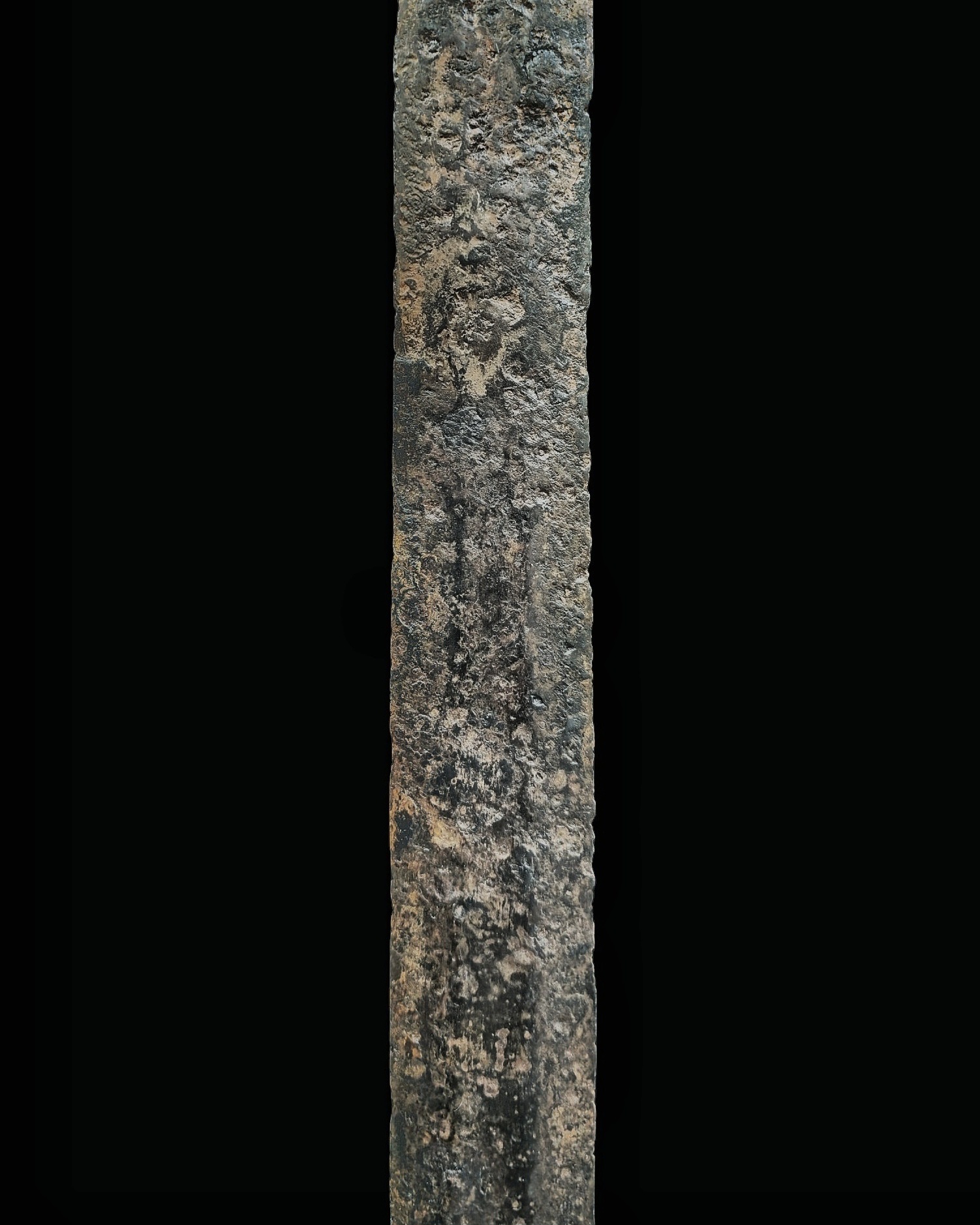
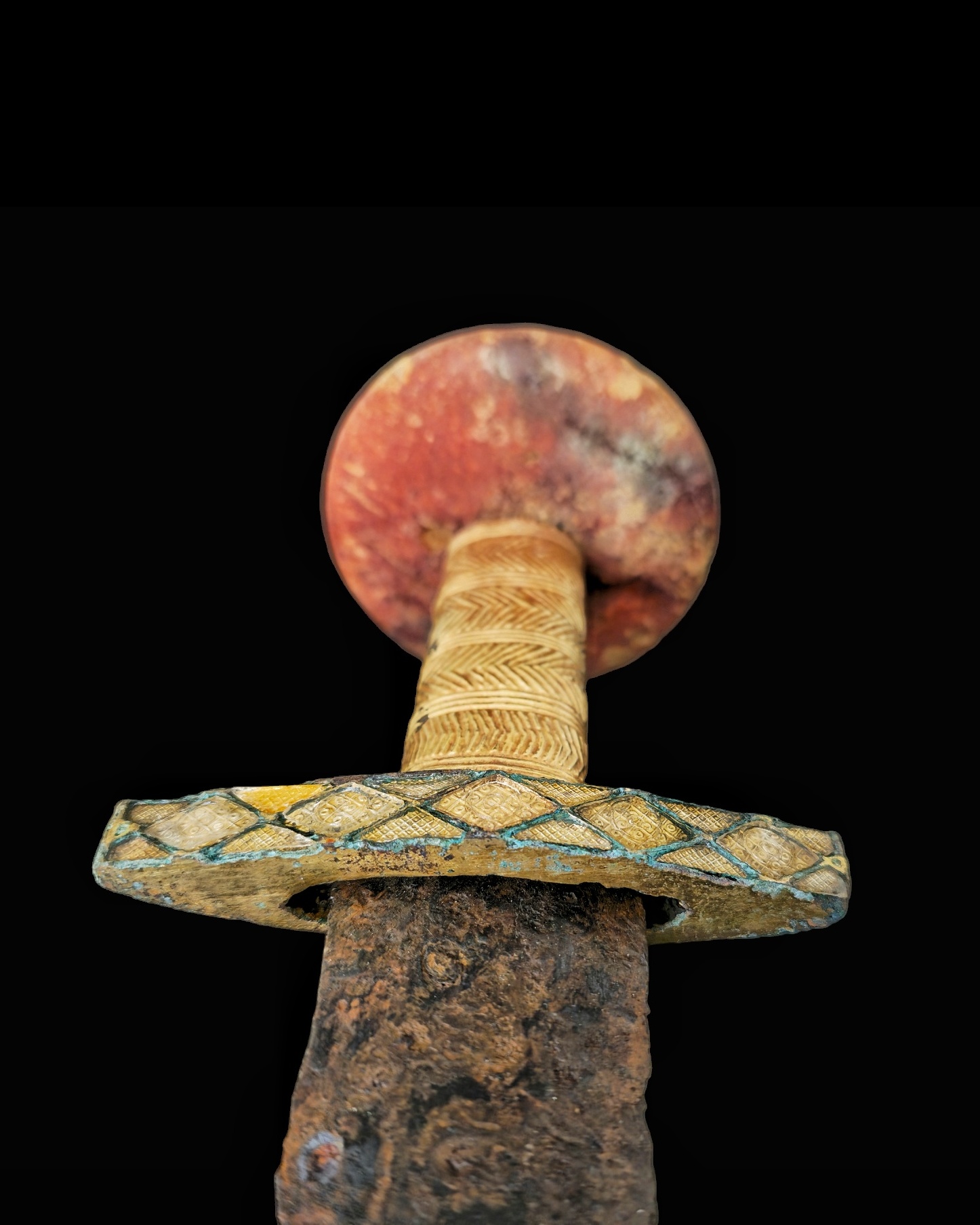
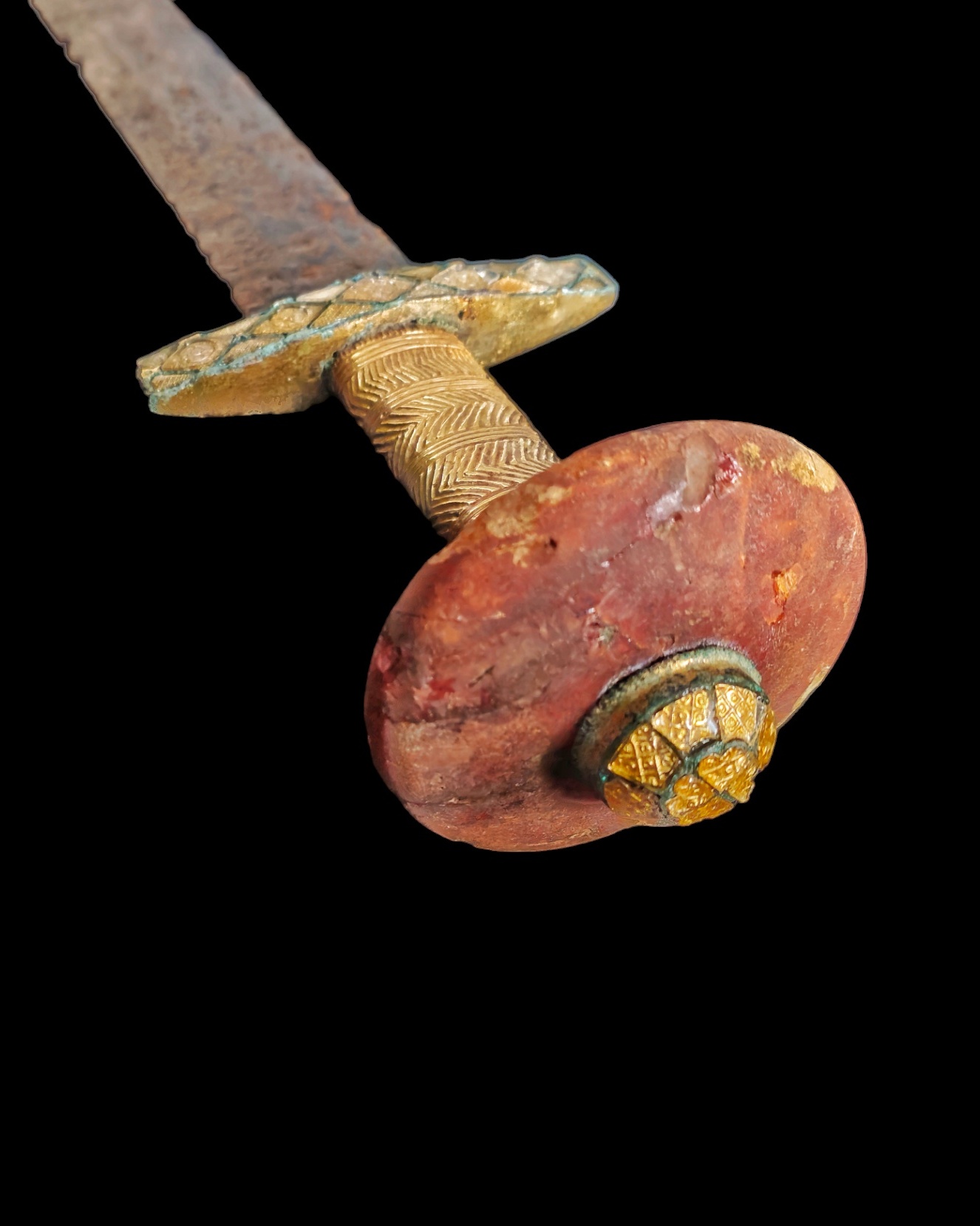
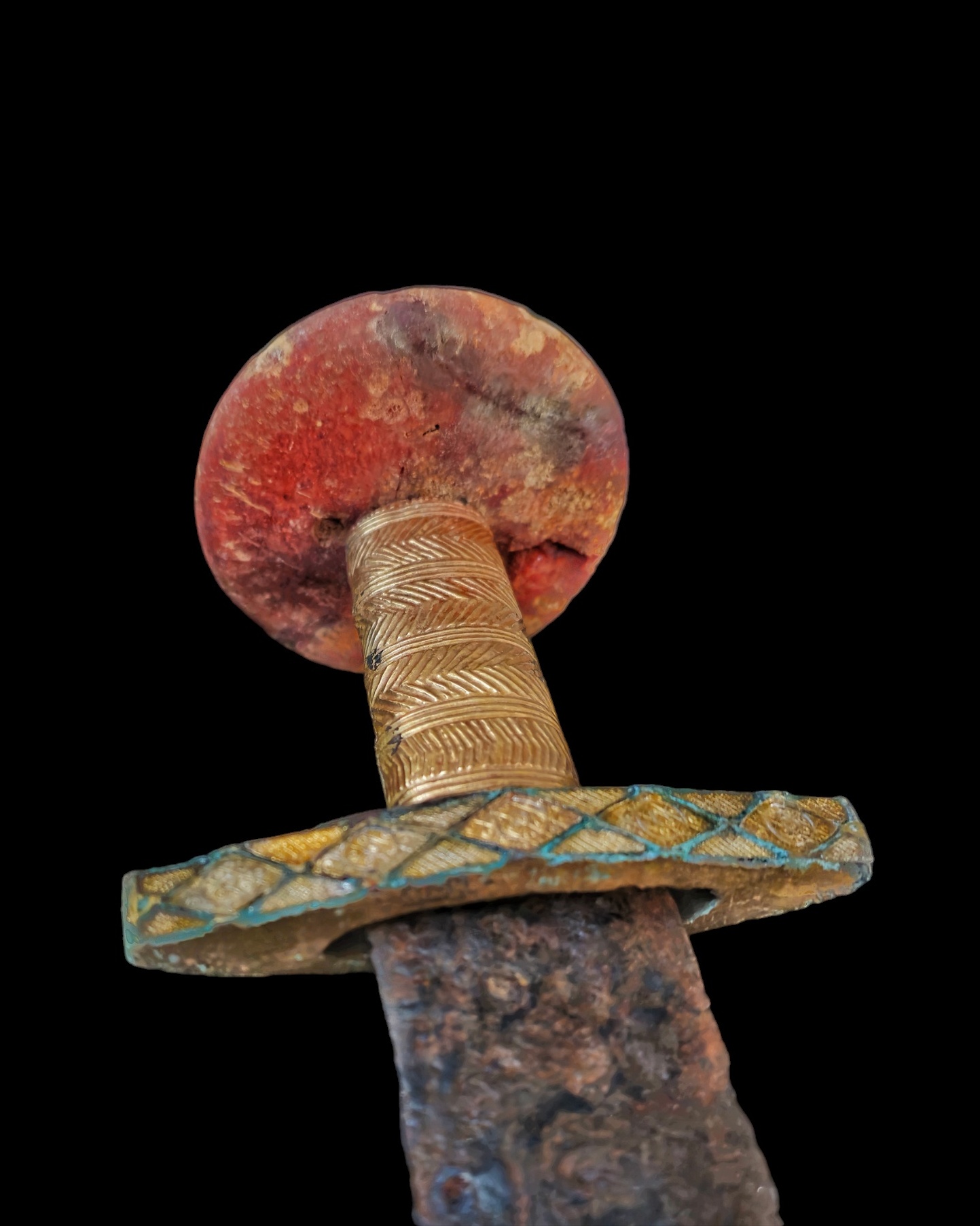
It has a double-edged, slightly tapering iron blade of lenticular cross section, with a short tip.
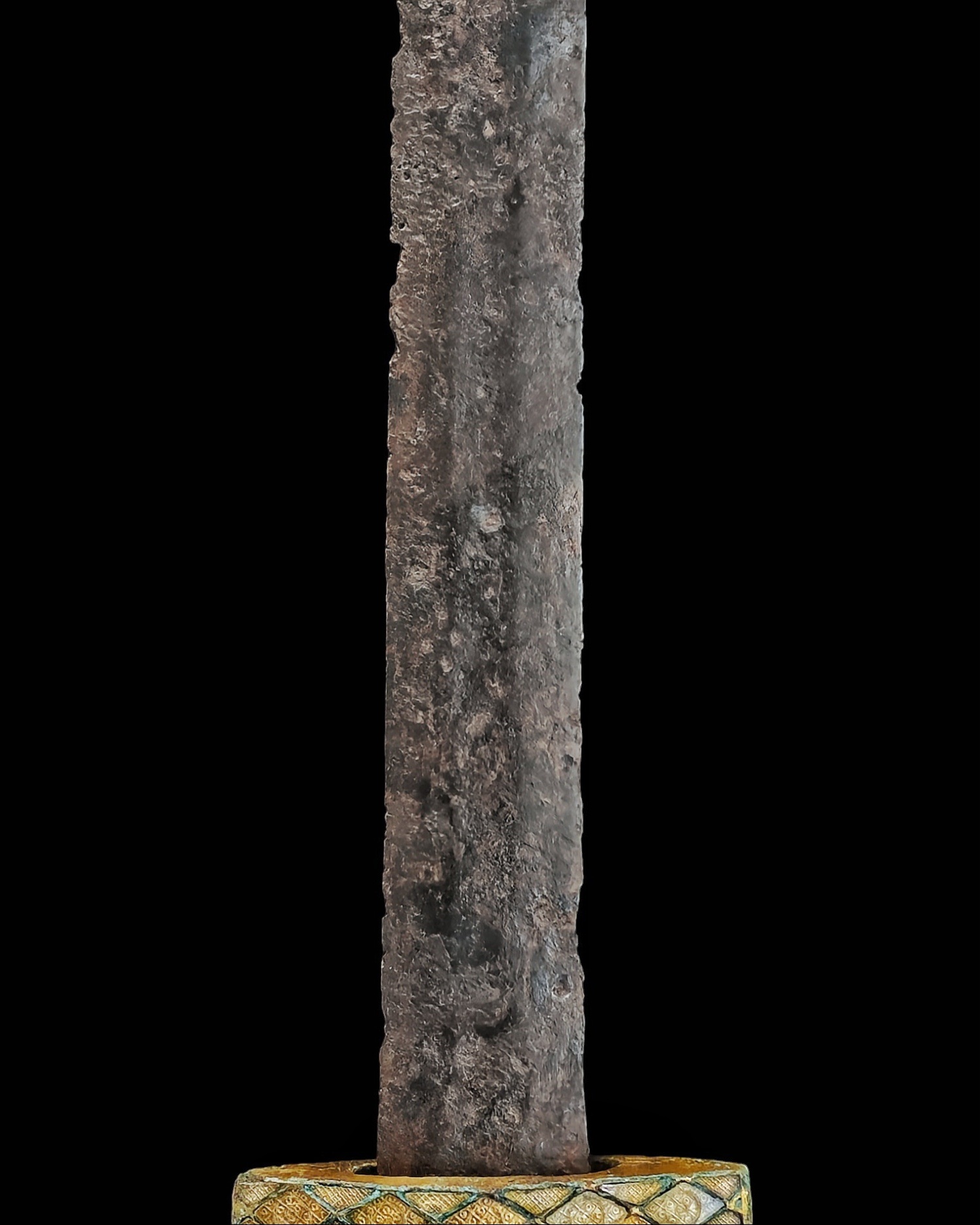
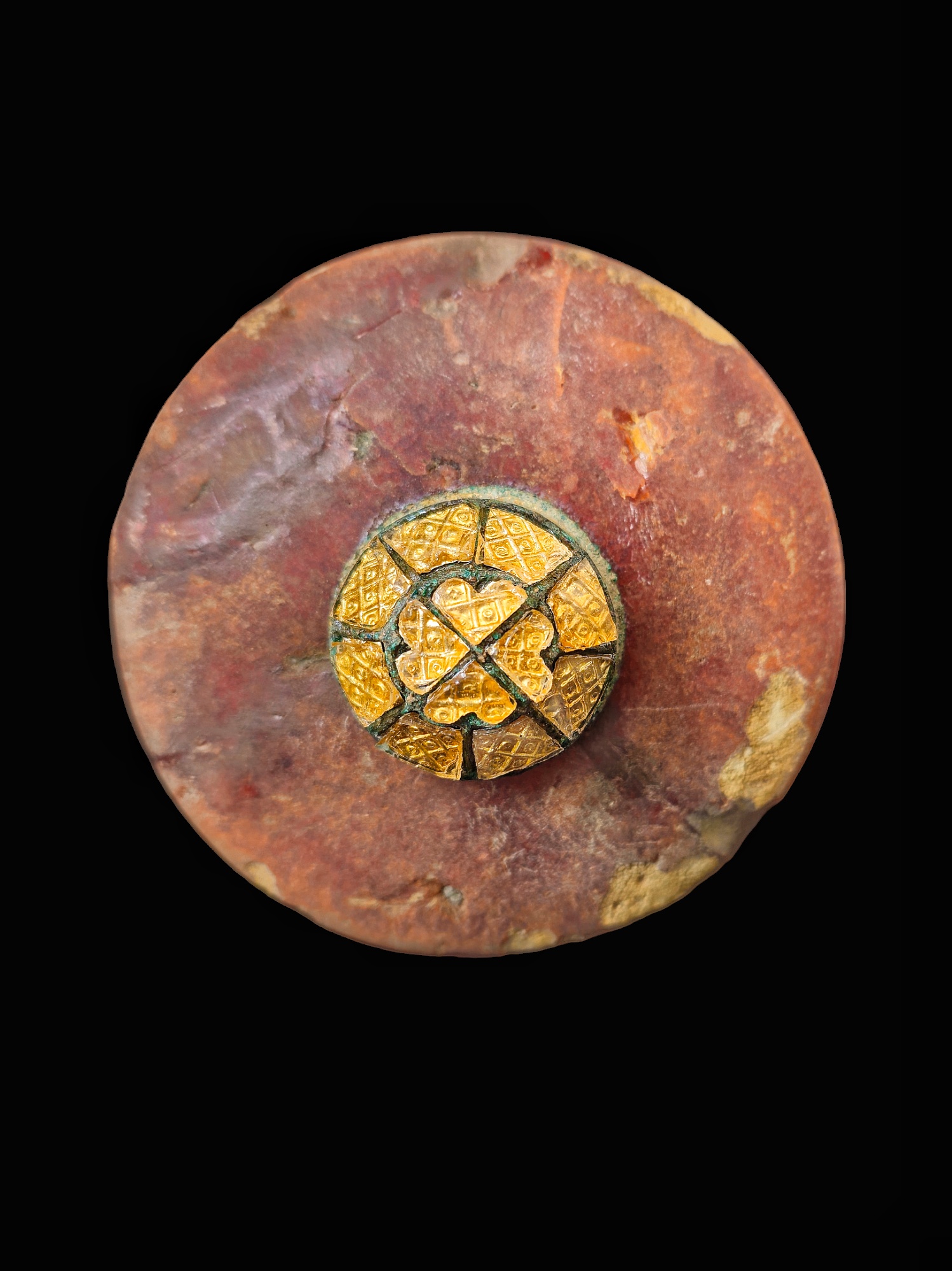
The bronze guard, in the shape of a prolonged rhomb, is inlaid with gold plates in averse. Each gold plate is decorated with geometric ornaments. The reverse of the guard is not decorated. The grip of the sword is plated with a gold sheet, richly decorated with embossed geometric motifs. The inside of the grip is reconstructed with wood because the original organic material (most probably wood, less possibly bone) of the grip did not survive. The pommel is made of large, processed amber, ending with a round spherical plate of gold, with an iron tang visible in the center.
Total length 99.7 cm. Blade length 86.7 cm, width near the guard 4.2 cm, thickness 5.3 mm. Length of the crossguard 10.5 cm, height – 13.3 mm. Diameter of the pommel – 6.9 cm, thickness – 3.6 cm. Weight of the sword – 858 g.
Bibliography:
A. Alföldi. Funde aus der Hunnenzeit und ihre ethnische Sonderung. Arch. Hungarica 9, 1932;
J. Werner. Beiträge zur Archäologie des Attila-Reichs. W. Menghin, Das Schwert im frühen Mittelalter. Chronologisch-typologische Untersuchungen zu germanischen Langschwertern des 5. bis 7. Jahrhunderts n. Chr., 1983;
B. Anke. Studien zur reiternomadischen Kultur des 4. bis 5. Jahrhunderts n. Chr., 1998.