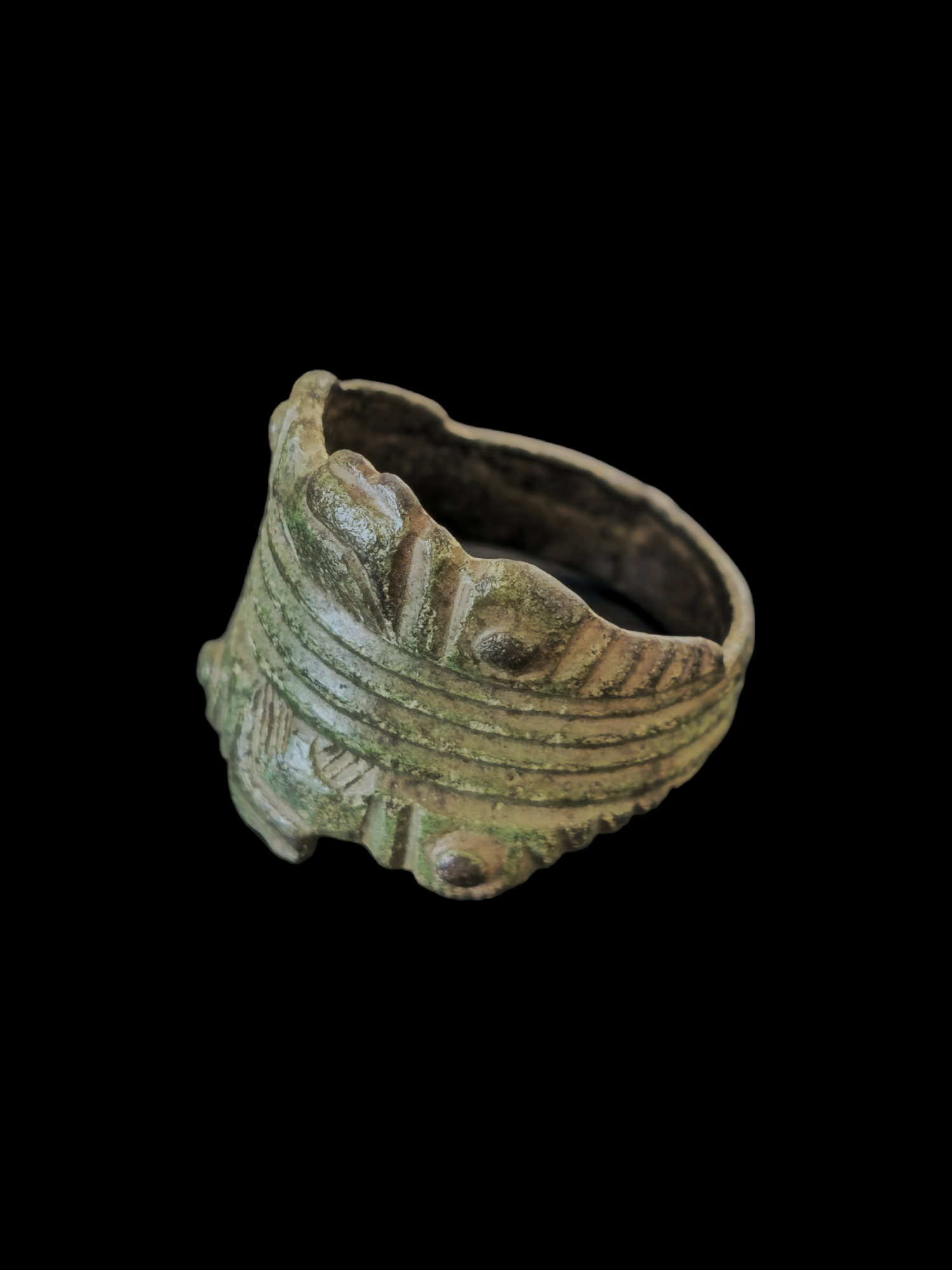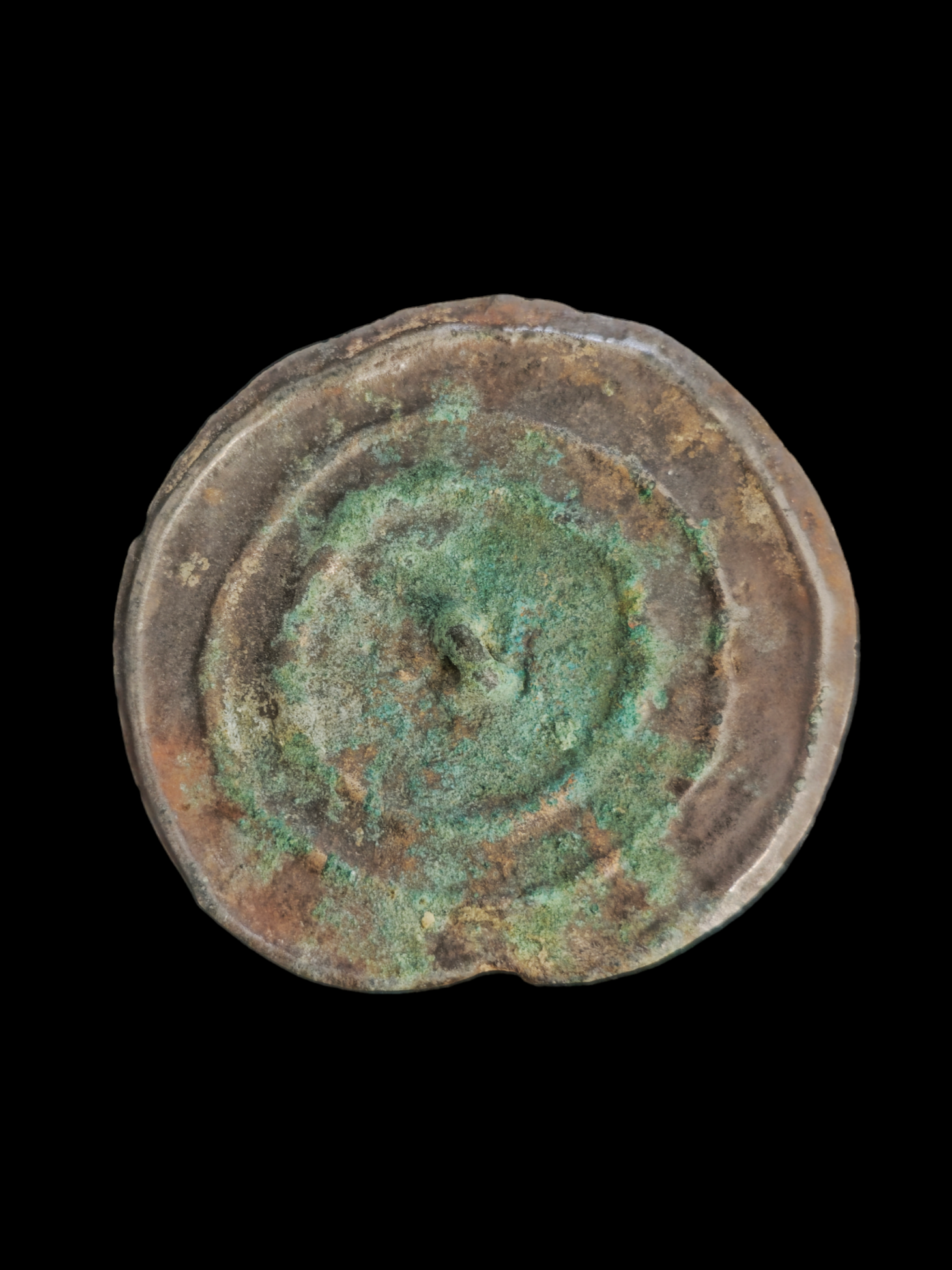

Ancient bronze has survived millennia underground, passed through countless hands, and arrived in your care in a state of hard-won equilibrium. The single most useful thing a collector can do is to respect that equilibrium — to understand what it took to achieve, and to avoid disrupting it through well-intentioned but unnecessary intervention.
Understanding the Patina
The surface of an ancient bronze is not merely decorative. The layers of cuprite, malachite, azurite, and other compounds that form what we call the patina are the product of the metal’s slow chemical conversation with its burial environment over centuries. These layers are genuinely protective: a stable, well-mineralised patina is harder and less reactive than the underlying metal, and it seals the surface against further change. When we admire the rich olive-green or warm chocolate-brown of a well-preserved ancient bronze, we are looking at chemistry doing its job.
A stable patina is smooth, dense, and adherent — it does not flake, powder, or show active change. It may be many colours: green, blue, brown, black, or combinations of all of these, depending on the burial conditions and the alloy’s composition. None of this is cause for concern. What the collector needs to learn to distinguish is the difference between this stable, historic surface and something altogether more alarming.
Bronze Disease: Recognising the Enemy
Bronze disease is the common name for a progressive corrosion process caused by the presence of cuprous chloride salts within the metal. When these salts are exposed to moisture and oxygen, they enter a self-sustaining cycle of reactions that gradually destroy the bronze from within. The outward sign is unmistakable: bright, powdery, pale green spots — quite different in character from the smooth, muted greens of stable patina. The powder may be slightly waxy or crystalline, and affected areas often feel slightly raised or pitted.
Bronze disease does not rest — left untreated in a damp environment, a single active spot can spread across a surface in months, consuming irreplaceable ancient metal as it goes.
The distinction between stable green patina and active bronze disease is not always immediately obvious to the newcomer, but it becomes reliable with a little practice. If in any doubt — if you notice a spot that seems different in texture or brightness from the surrounding surface, or that appears to have changed since you last examined the piece — seek a conservator’s opinion before doing anything else. The cost of professional advice is trivial compared to the damage that can result from misidentified corrosion or amateur treatment.
Environment: The Foundation of Good Care
Most bronze problems begin with environment. Moisture is the primary driver of active corrosion, and chloride salts — which are present in the air in coastal locations, in certain building materials, and on human skin — provide the reagents that sustain bronze disease once it starts. The basic principle of caring for ancient bronze is therefore to maintain a stable, dry environment.
A relative humidity somewhere in the range of forty to fifty per cent, held as consistently as possible, is generally considered favourable for bronze storage and display. Fluctuations in humidity are often more damaging than a level that is slightly above ideal but constant, because repeated expansion and contraction of corrosion products can cause mechanical stress to the surface. Avoid placing bronzes near radiators, in damp basements, in conservatories with large temperature swings, or in rooms prone to condensation. A well-insulated interior room, away from exterior walls, is usually preferable to a beautifully lit alcove in a draughty old house.
Handling, Light, and Dust
Handle ancient bronze with clean, dry hands — or better still, with clean cotton gloves. The chloride salts and oils naturally present in skin can initiate or accelerate corrosion in ways that are not immediately apparent, and the effects may not become visible for months or years. This is one of those precautions that feels pedantic until one sees what a fingerprint can do to a bronze surface over time.
Light, unlike moisture, is not a significant direct threat to bronze — but ultraviolet radiation can affect organic materials that may accompany a piece, and strong directional light will reveal surface detail in ways that can make even stable patina look textured and uneven. If you are displaying bronze under artificial light, cool sources with a low UV component are preferable. Dust is a nuisance rather than a danger, but it should be removed gently — a soft, dry natural-bristle brush is generally sufficient, and nothing abrasive should ever be brought near an ancient surface.
The Conservator’s Role
We counsel strongly against attempting to clean or treat an ancient bronze without professional guidance. The temptation to remove an unsightly green spot, or to brighten a dull surface, is understandable — but the tools and chemicals available to the amateur are far more likely to cause lasting damage than the condition they were applied to address. Ancient surfaces are fragile, complex, and irreplaceable; a mistake cannot be undone.
A qualified conservator — one with specific experience in ancient metals — can assess active corrosion, stabilise bronze disease, consolidate flaking areas, and advise on the long-term environment for your piece. Periodic review by a conservator, even when no obvious problem exists, is simply good stewardship. The objects in our care have lasted two thousand years; with a little informed attention, they will last considerably longer.