Every object that passes through our hands arrives carrying its own argument — a physical case made in clay, bronze, or stone, across centuries of use, burial, and survival. Our task is to listen to that argument carefully, and to know when it does not hold.
The First Layer: Style and Typology
Authenticity begins with looking. A genuine antiquity belongs to a tradition — it exhibits the proportions, conventions, and decorative vocabulary of its time and place. We ask whether the form is consistent with what the archaeological and art-historical record tells us about objects of this type: the way a vessel sits, the disposition of a figure’s weight, the hierarchy of ornament on a fibula or a lamp. Stylistic coherence is not proof in itself — a skilled forger can learn the grammar of a period — but its absence is often telling. A piece that feels wrong in its proportions, or that combines elements from incompatible traditions, earns a harder scrutiny.
Typology extends this. Certain classes of object are well enough studied that we can place a piece within a sequence of known examples. Where a piece sits within that sequence, and how it relates to comparanda in museum collections and published corpora, tells us a great deal. A type that appears to have no antecedents, or one that coincidentally condenses every desirable feature of several subtypes at once, warrants caution.
Material and Technique
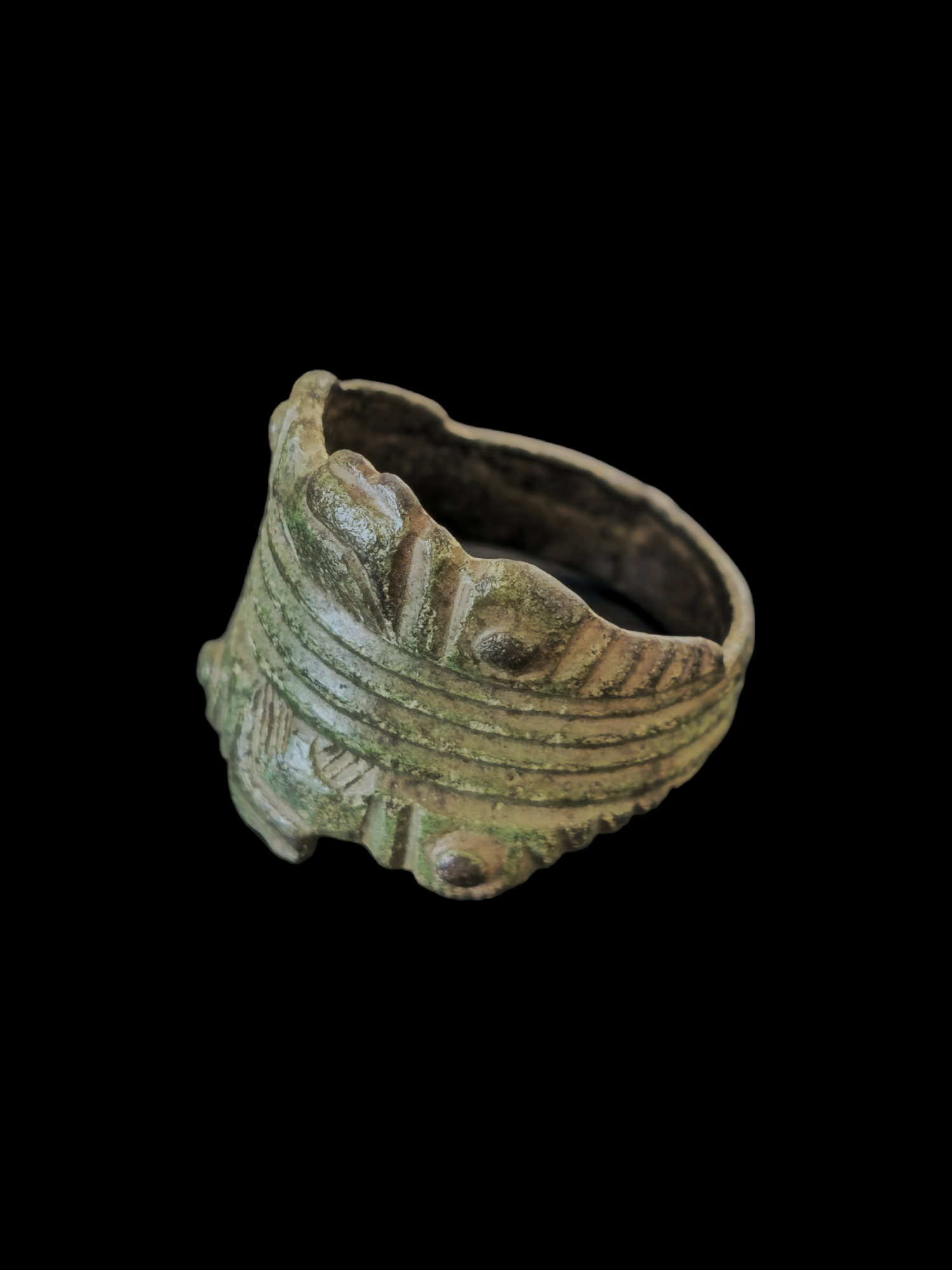
The hand of the ancient maker is present in the material itself. Bronze alloy compositions shifted across periods and regions; ceramic fabrics reflect local clay sources and firing traditions; stone-carving tools leave characteristic marks. We attend to these traces. The way a surface was worked — the chisel cuts on marble, the casting seams on bronze, the brush strokes in polychrome — speaks to the technology and conventions of its era. Anachronistic technique is one of the surest signals that something is not what it claims to be.
We do not pretend that visual and tactile examination alone resolves every question. A careful house knows its own limits, and knows when a question is better referred to specialists with the instruments and expertise to go further. What we insist upon is that any technical consultation worth relying upon comes from independent parties with recognised standing — not from sources with an interest in the outcome.
Condition, Wear, and Patina
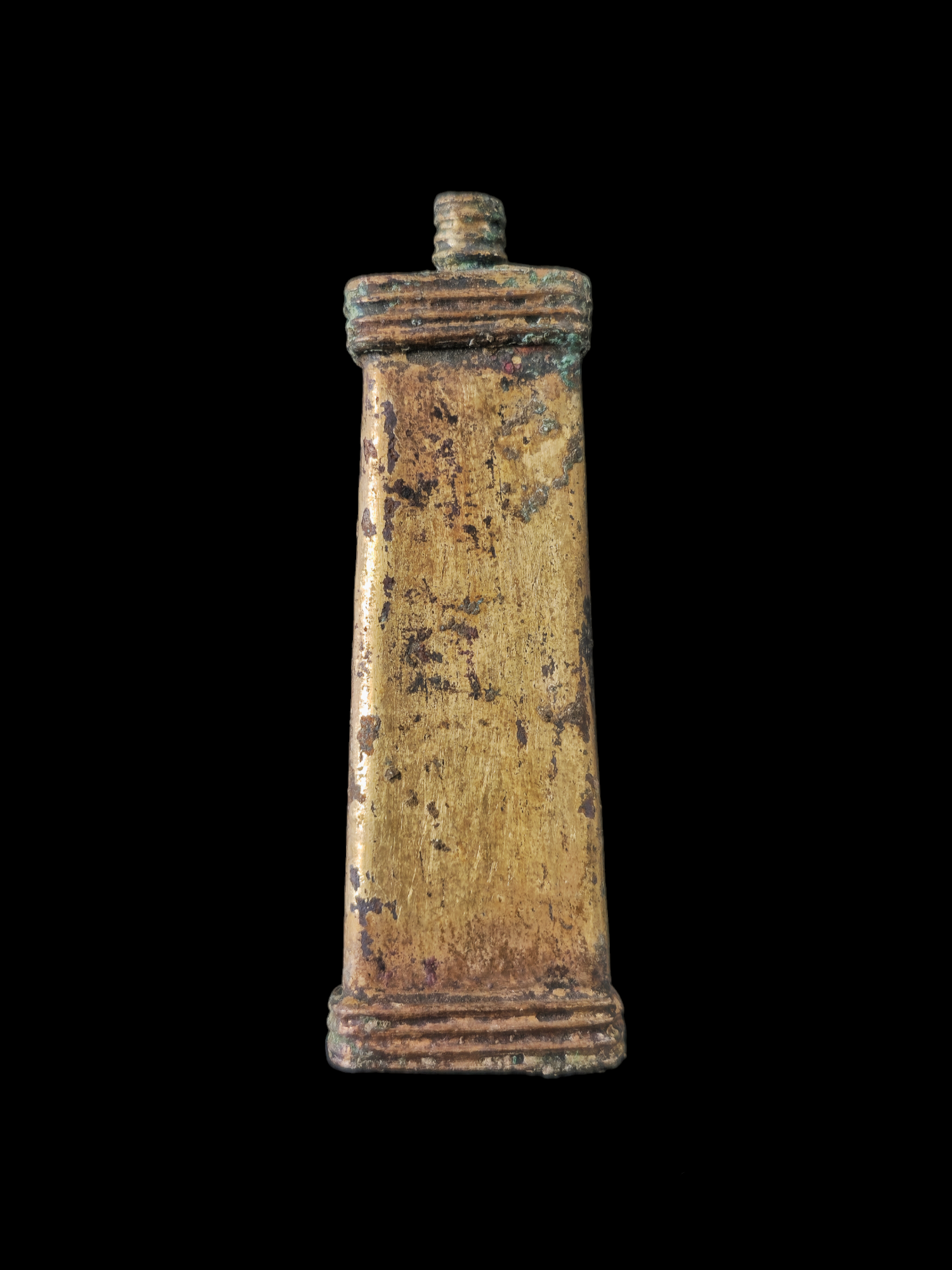
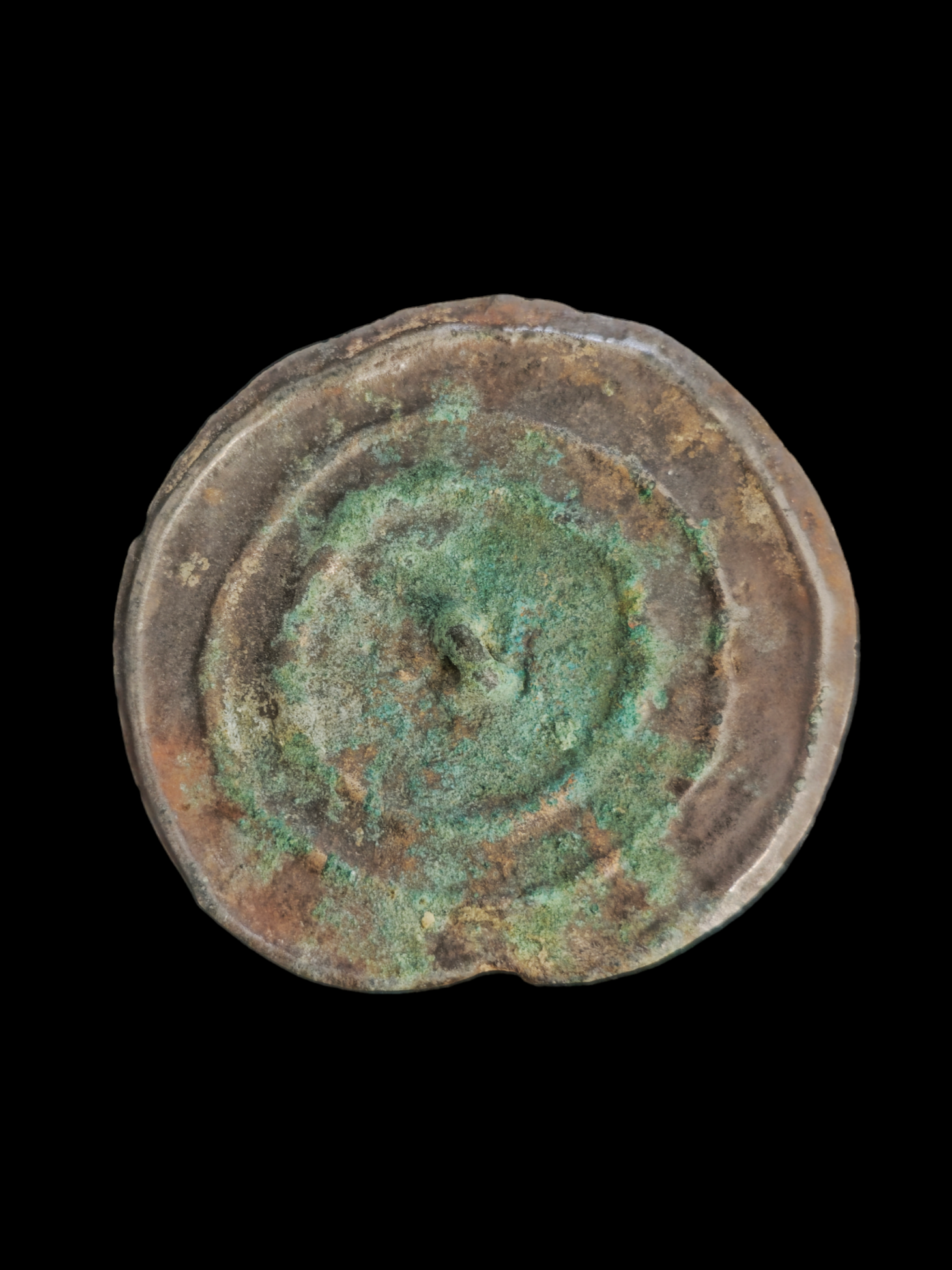
Genuine age leaves its mark in ways that are extraordinarily difficult to simulate convincingly. Wear accumulates where use dictates — on the base of a vessel, at the grip of a handle, at the high points of a relief that a hand would naturally touch. Patina on bronze forms through electrochemical processes that are bound to the object’s burial environment and cannot be rushed without leaving traces. The distribution of concretion, the penetration of oxidation into surface detail, the micro-texture of an aged stone surface — each of these is a chapter in the object’s physical biography.
Patina is not merely a surface effect; it is a record of time, and time cannot be convincingly faked at the level of chemistry.
We are attentive to the difference between honest wear and artificial distressing, between a patina that has formed naturally and one that has been induced. This is not a mechanical checklist but a judgement built from extended looking — from the experience of handling many genuine objects of a given type and period until one develops an instinct for what is right.
Provenance as Corroboration
Documentation — ownership history, old exhibition labels, auction records, publication references — does not substitute for the physical evidence, but it can corroborate it powerfully. A piece that appears in a respected collection catalogue from the mid-twentieth century, or that can be traced through a sequence of reputable sales, has had its claims tested by previous expert eyes and carries the weight of that history.
We value documented history not because paperwork makes an object genuine — it does not — but because a coherent, verifiable collecting history adds a dimension of evidence that strengthens a physical case. Equally, the absence of any such history is not in itself damning: many perfectly genuine pieces entered collections before documentation was customary. The question is always whether the physical and the historical evidence, taken together, form a convincing and internally consistent account.
The Judgement We Stand Behind
At the end of this process, there is a decision. We hold ourselves to a simple standard: we offer only what we are prepared to stand behind unreservedly. When our judgement is that a piece is genuine, we say so clearly and explain why. When doubts persist — when the evidence is genuinely equivocal, or when something gives us pause that we cannot fully articulate but cannot dismiss — we do not offer the piece. The cost of being wrong falls not only on the buyer but on the integrity of the house, and that is not a cost we are willing to accept.
This is not a claim to infallibility. Scholarship advances; new comparanda come to light; attributions that seemed secure are sometimes revised. What we can promise is that every piece we offer has been subjected to serious, sceptical, multi-layered scrutiny — and that our judgement, where we give it, is given honestly and in good faith.