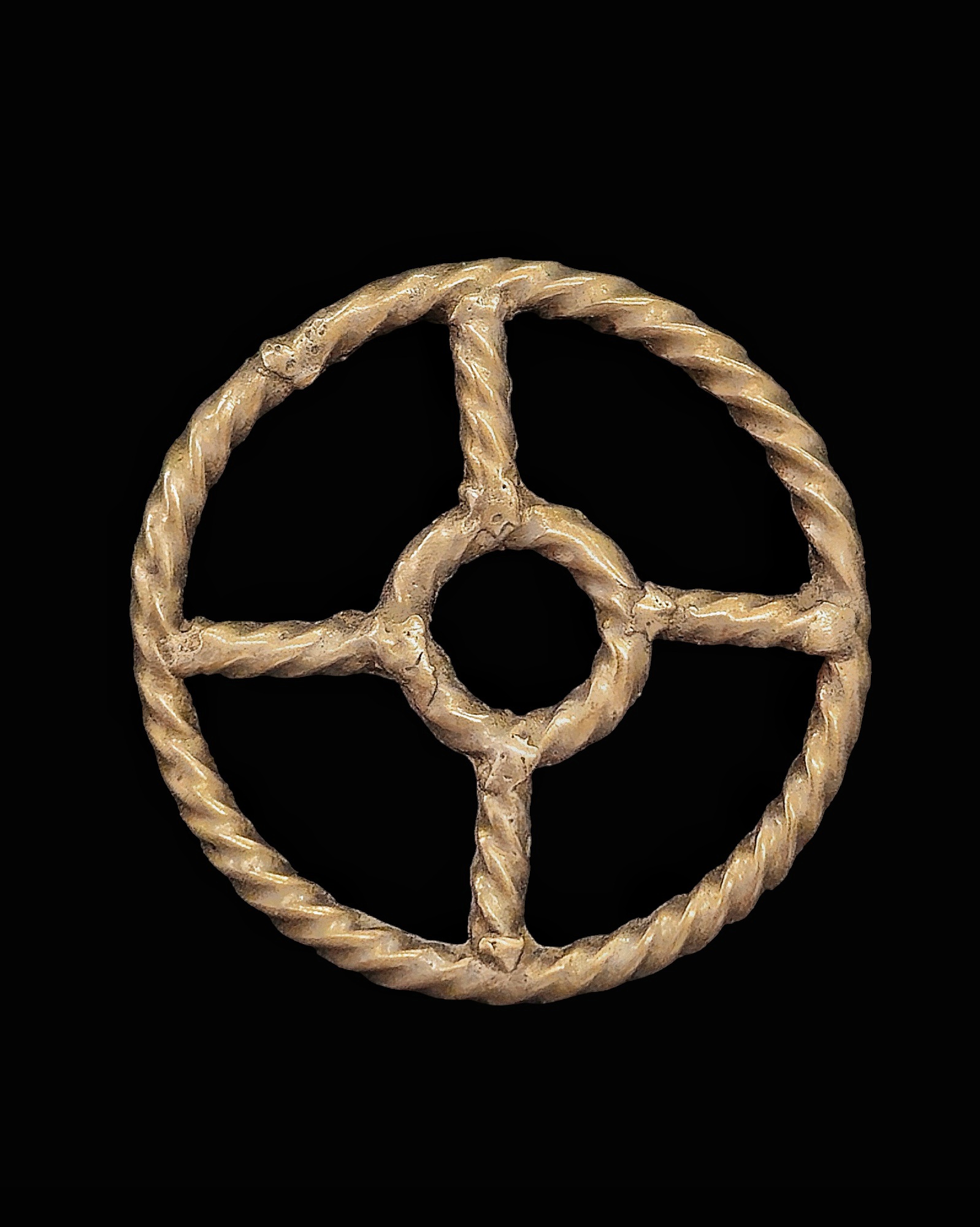
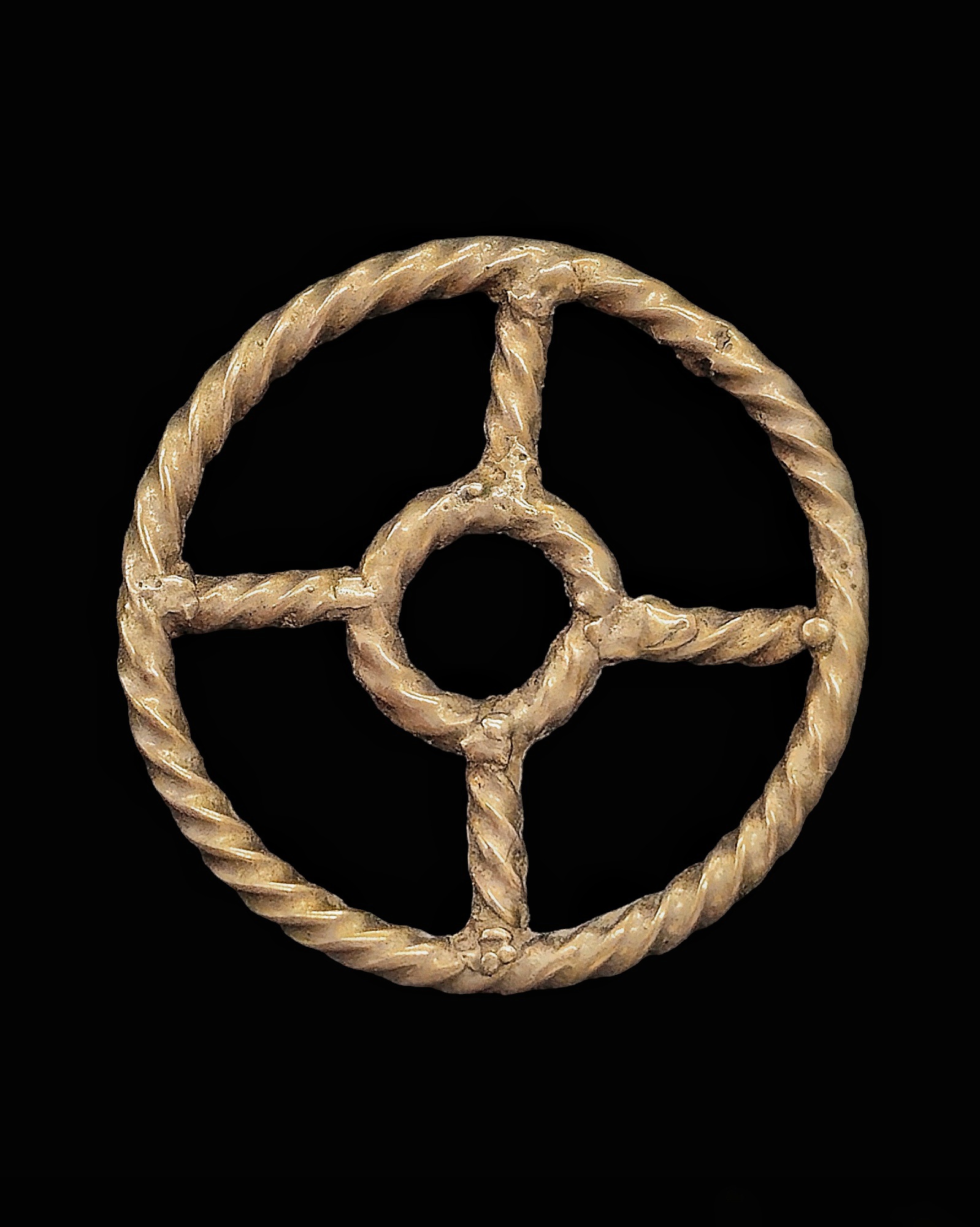
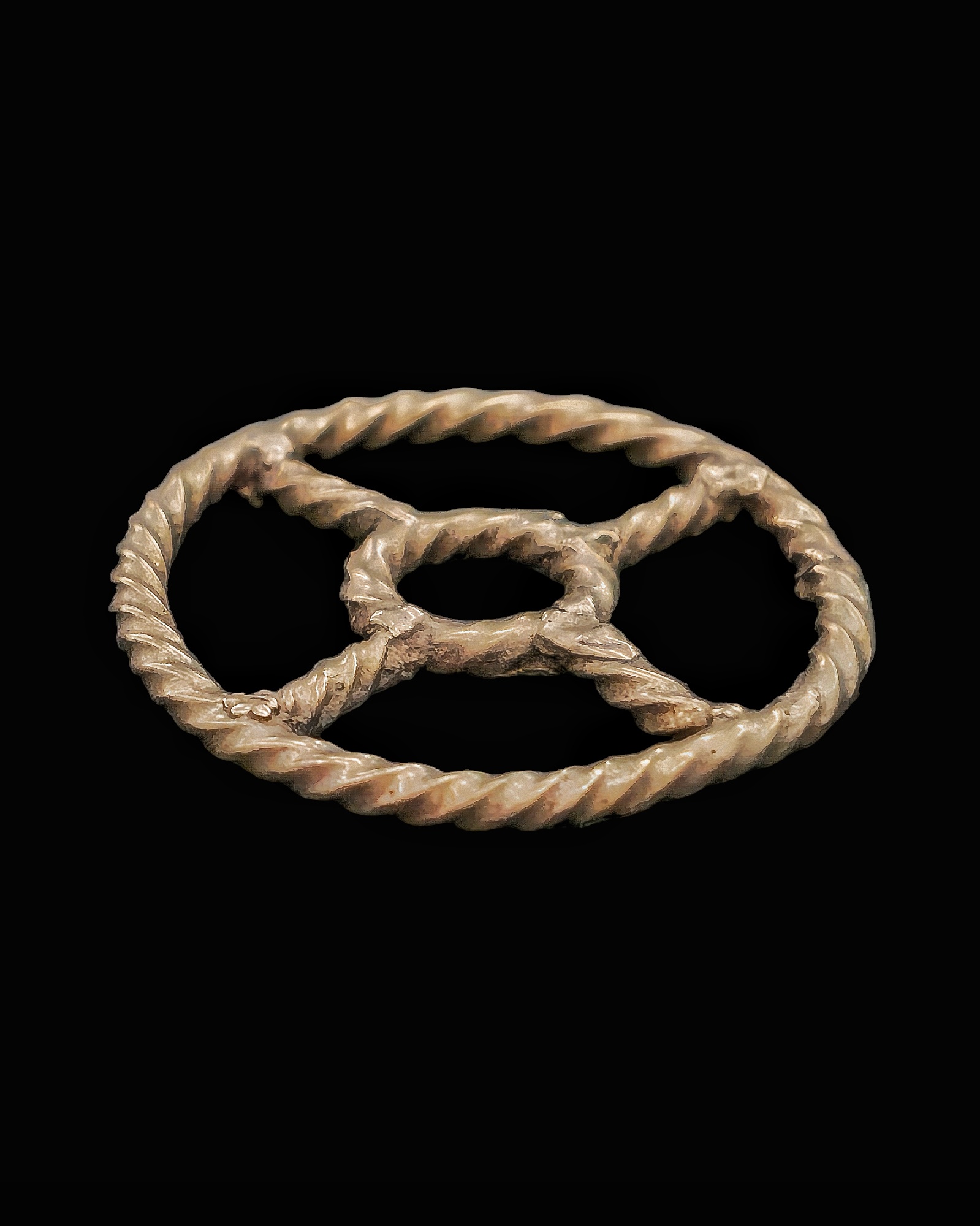
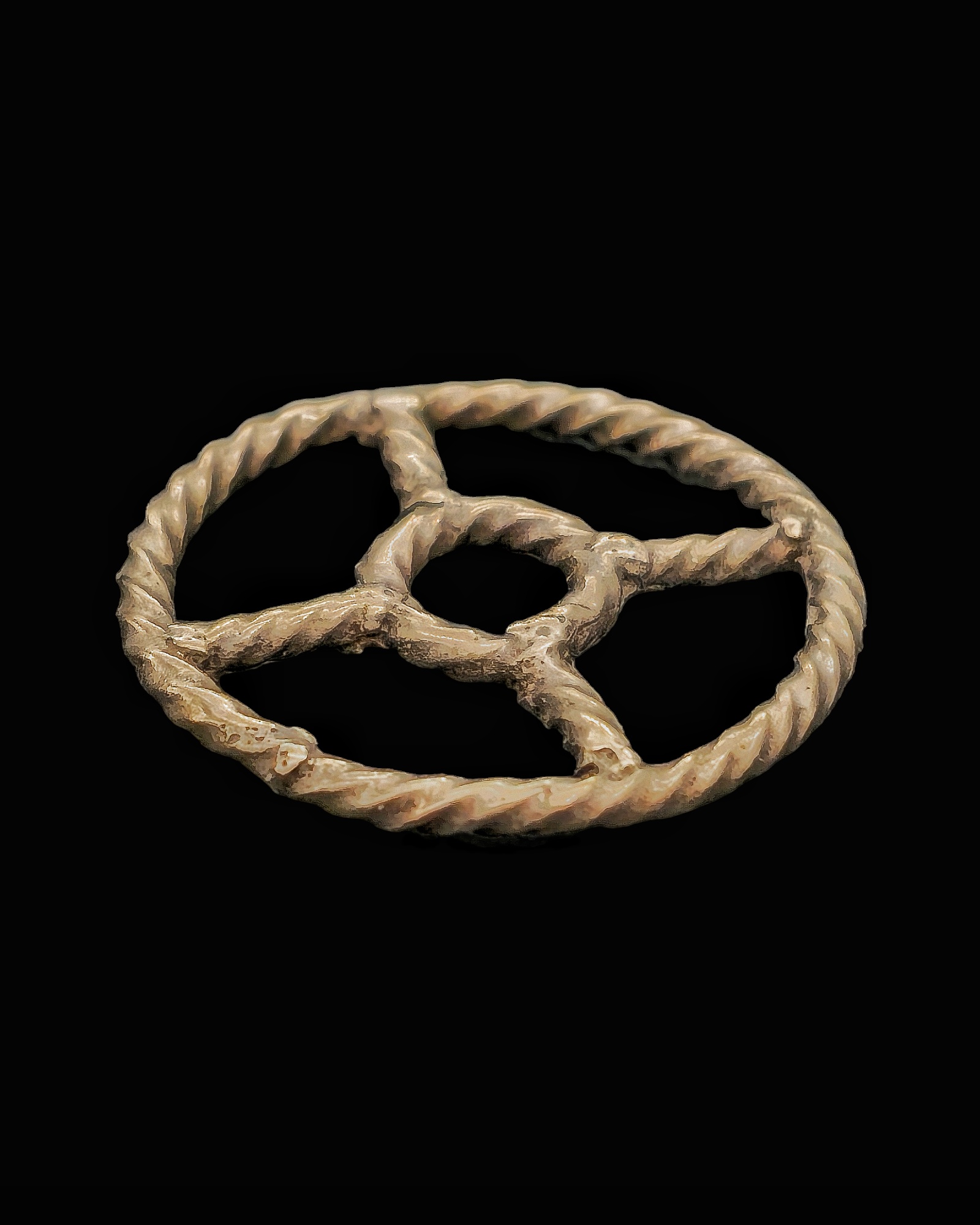
Late iron age gold, silver and copper alloy amulet
280.00 €
1 in stock
Description
A gold, silver and copper alloy spoked-wheel amulet from the late Iron Age, 3rd-1st century BC.
Diameter: 20,5 mm
Weight: 1,7 g
Wheel rings or spoked-wheel amulets are a ubiquitous and popular part of the material culture of the La Tène period. They occur from the 5th century BC onwards, from France to Hungary, across the vast territory of the La Tène culture.
The symbolism of wheel amulets remains unexplained. They are usually associated with Sun symbology, as chariots or wheels represented the Sun carriage from the Bronze Age. Another common association is with other celestial bodies or phenomena, typically thunder.
In material culture, spoked wheels were most probably used in personal jewellery, perhaps as amulets or special symbols, as is suggested by their depiction of Celtic coins and evidence from burials since the early La Tène.
They were often worn as pendants on necklaces or suspended from brooches on bronze chains (e.g. numerous finds from the oppidum of Stradonice; Píč, 1903).
In central Europe, a significant concentration was observed at the oppidum of Stradonice (Figure 1; Píč, 1903; Kysela and Venclová, 2018), and at Manching (van Endert, 1991), which suggested that the amulets were typically oppida objects; they had first been described as such in Déchelette’s well-known comparative table (1914). They are now known to be present at almost every site from the middle to the late La Tène period (i.e. 3rd to 1st century BC) with a particular profusion during the “oppida period” (2nd to 1st century BC).
Provenance: Till the 1980s in the private Belgian collection of B.S. Since the 1980s in the private British collection of D.A. Was bought by the current owner in 2016 from A.A. in London, UK, who had owned the item since 2011.